Tianjin Honray Science and Technology Co., Ltd


Exploring the Different Types of Anesthesia Breathing Circuits Available: A Comprehensive Guide
Mar 10,2026
Exploring the Different Types of Anesthesia Breathing Circuits Available Anesthesia is a vital component of modern medicine, facilitating safe and effective surgical procedures. Central to anesthesia delivery is the breathing circuit, an essential component that connects the anesthesia machine to the patient. In this article, we will explore the various types of anesthesia breathing circuits, thei
Exploring the Different Types of Anesthesia Breathing Circuits Available
Anesthesia is a vital component of modern medicine, facilitating safe and effective surgical procedures. Central to anesthesia delivery is the breathing circuit, an essential component that connects the anesthesia machine to the patient. In this article, we will explore the various types of anesthesia breathing circuits, their functions, applications, and considerations for their use.
Table of Contents
1. Understanding Anesthesia Breathing Circuits
2. The Importance of Breathing Circuits in Anesthesia
3. Types of Anesthesia Breathing Circuits
3.1. Mapleson Classification
3.2. Circle Breathing Circuit
3.3. Bain Circuit
3.4. T-Piece Circuit
3.5. Non-Rebreathing Circuits
4. Key Components of Breathing Circuits
5. Selection Criteria for Anesthesia Breathing Circuits
6. Safety Protocols in Using Anesthesia Breathing Circuits
7. Advances in Anesthesia Breathing Circuit Technology
8. Frequently Asked Questions (FAQs)
9. Conclusion
1. Understanding Anesthesia Breathing Circuits
Anesthesia breathing circuits serve as the conduit for delivering anesthetic gases and oxygen to the patient while allowing for the removal of carbon dioxide. The efficient functioning of these circuits is crucial for patient safety during surgical procedures. They ensure that the right mix of gases reaches the patient and facilitate ventilation throughout the operation.
2. The Importance of Breathing Circuits in Anesthesia
The significance of breathing circuits in anesthesia cannot be overstated. They play a critical role in maintaining the patient's respiratory function, monitoring gas exchange, and adjusting anesthetic delivery based on the patient's needs. A well-designed breathing circuit can enhance ventilation efficiency, minimize the risk of hypoxia, and support patient recovery.
3. Types of Anesthesia Breathing Circuits
Several types of anesthesia breathing circuits exist, each designed for specific purposes. Understanding these circuits is essential for healthcare professionals to select the appropriate one for their clinical requirements.
3.1. Mapleson Classification
The Mapleson classification system categorizes breathing circuits into five types (A to E) based on their efficiency in delivering anesthetic gases and managing carbon dioxide rebreathing. Each type reflects different designs and configurations, influencing their performance in various clinical scenarios.
3.2. Circle Breathing Circuit
The **circle breathing circuit** is a closed system that recirculates exhaled gases after carbon dioxide removal. It comprises a series of components, including a carbon dioxide absorber and unidirectional valves, ensuring low gas flow rates and reduced waste of anesthetic gases. This design significantly enhances the efficiency of anesthetic delivery, making it a popular choice in modern anesthesia practices.
3.3. Bain Circuit
The **Bain circuit**, a modification of the Mapleson D system, is known for its low resistance and minimized dead space. It features a coaxial design with a smaller limb delivering fresh gas alongside the larger limb allowing for exhalation. This configuration is particularly advantageous for pediatric patients and those requiring high flow rates, as it ensures adequate ventilation while conserving anesthetic gases.
3.4. T-Piece Circuit
The **T-piece circuit** is primarily used in spontaneous ventilation scenarios. It consists of a T-shaped connector, allowing for easy attachment of a face mask or endotracheal tube. This circuit is particularly useful in patients who do not require mechanical ventilation, offering flexibility in anesthetic delivery.
3.5. Non-Rebreathing Circuits
**Non-rebreathing circuits** utilize a system of unidirectional valves to prevent the inhalation of exhaled gases. Commonly used in emergency situations or when rapid induction is necessary, these circuits ensure that patients receive fresh gas with minimal contamination. They are invaluable in specific scenarios, such as in the pediatric population or in patients with compromised respiratory function.
4. Key Components of Breathing Circuits
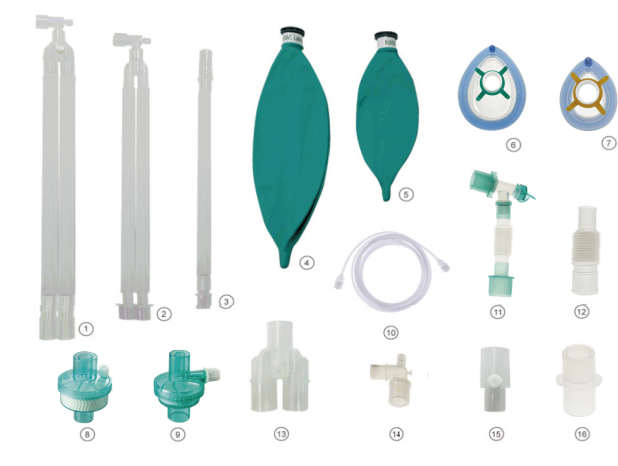
Understanding the key components of anesthesia breathing circuits is essential for their effective use. Some of these components include:
- **Fresh Gas Flow (FGF) System:** Delivers a mixture of oxygen and anesthetic gases.
- **Carbon Dioxide Absorber:** Removes carbon dioxide from exhaled gases to prevent rebreathing.
- **Unidirectional Valves:** Ensure gases flow in one direction, preventing backflow.
- **Reservoir Bags:** Collect exhaled gases and provide a source of fresh gas for the patient.
Each of these components contributes to the overall functionality and safety of anesthesia delivery.
5. Selection Criteria for Anesthesia Breathing Circuits
Selecting the appropriate breathing circuit involves several considerations:
- **Patient Size and Age:** Different circuits cater to various patient demographics, from neonates to adults.
- **Type of Surgery:** The nature of the surgical procedure can dictate the need for specific circuit designs.
- **Ventilation Requirements:** The circuit must accommodate the patient's ventilation needs, whether spontaneous or mechanical.
- **Efficiency:** Consideration of gas flow rates and rebreathing potential must be taken into account.
Making an informed choice based on these criteria can enhance patient outcomes and improve the efficiency of anesthesia delivery.
6. Safety Protocols in Using Anesthesia Breathing Circuits
Implementing safety protocols is critical in anesthesia practice. Some essential protocols include:
- **Regular Equipment Checks:** Ensure all components are functioning correctly before surgery.
- **Monitoring Patient Condition:** Continuous monitoring of vital signs and gas exchange helps detect any complications early.
- **Proper Training:** Healthcare providers should be adequately trained in using different types of breathing circuits to ensure optimal performance.
- **Use of Checklists:** Utilizing checklists can minimize the risk of errors during circuit setup and operation.
These safety measures are vital in maintaining patient safety and enhancing the efficacy of anesthesia delivery.
7. Advances in Anesthesia Breathing Circuit Technology
Innovation in medical technology has led to significant advancements in anesthesia breathing circuits. Recent developments focus on improving patient safety, enhancing efficiency, and reducing environmental impact. Notable advancements include:
- **Smart Circuits:** Integrating sensors and monitoring technology to provide real-time feedback on gas exchange and patient status.
- **Eco-friendly Materials:** Development of materials that minimize environmental impact without compromising circuit integrity and performance.
- **Modular Designs:** Allowing for easy customization and adaptability based on specific clinical needs.
These advancements reflect ongoing efforts to enhance the quality of care in surgical settings.
8. Frequently Asked Questions (FAQs)
**Q1: What is the primary function of an anesthesia breathing circuit?**
A1: The primary function is to deliver anesthetic gases and oxygen to the patient while allowing for the removal of carbon dioxide.
**Q2: How do I choose the right breathing circuit for a patient?**
A2: Consider factors such as patient size, type of surgery, ventilation requirements, and efficiency in gas delivery.
**Q3: What are the benefits of using a circle breathing circuit?**
A3: Circle circuits enhance anesthetic delivery efficiency, reduce waste gas, and allow for controlled ventilation.
**Q4: Are there safety measures to follow when using breathing circuits?**
A4: Yes, regular equipment checks, continuous monitoring of patient vital signs, and proper training are crucial safety measures.
**Q5: What advancements have been made in breathing circuit technology?**
A5: Recent advancements include smart circuits with real-time monitoring, eco-friendly materials, and modular designs for adaptability.
9. Conclusion
Anesthesia breathing circuits are indispensable in modern medical practice, providing safe and effective means of delivering anesthesia during surgical procedures. Understanding the different types of circuits, their components, and the associated safety protocols is essential for healthcare professionals. With ongoing advancements in technology, anesthesia delivery continues to evolve, promising improved patient outcomes and enhanced safety measures. By staying informed and adopting best practices, medical professionals can ensure that they are utilizing the most effective breathing circuits for their patients, ultimately leading to a safer surgical experience.
PREVIOUS:

Contact Us
E-mail :
sales@jm-intl.com
Phone/WhatsApp:
+86 15201315855
Address:
Room 7-8, 9-1013, Building 13, Kangsheng Plaza, East of Guangxian Road, Xiazhuzhuang Sub-district, Wuqing District, Tianjin City



Can't find the service you're looking for? Contact us!
To inquire about our products, please leave your email to us and we will contact you within 24 hours.
Add
Room 7-8, 9-1013, Building 13, Kangsheng Plaza, East of Guangxian Road, Xiazhuzhuang Sub-district, Wuqing District, Tianjin City